Introduction
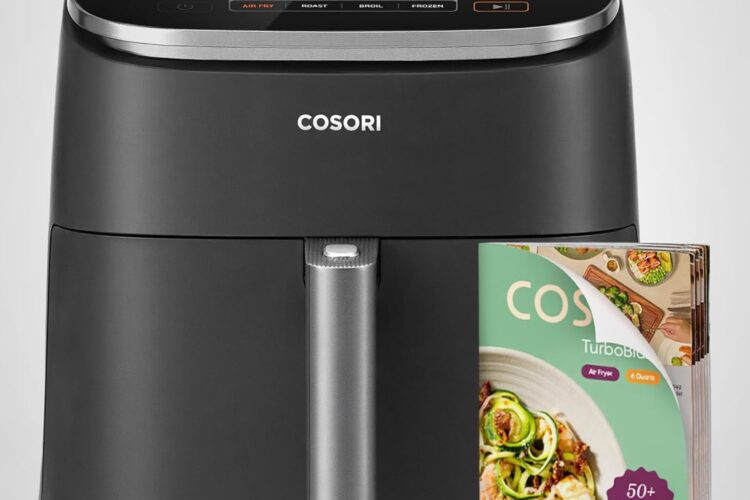
Air fryers have moved well past being a passing kitchen trend, and at this point they’ve become a fairly standard appliance in many households looking for a faster, lower-mess alternative to deep frying or oven cooking for smaller portions. The Cosori 9-in-1 TurboBlaze Air Fryer is one example of how far this category has evolved, combining a wide temperature range, multiple cooking modes, and a ceramic-coated basket designed without PFAS chemicals. With a 6-quart capacity and nine distinct functions, it’s built to handle a wide variety of cooking tasks beyond just frying.
This article breaks down what the Cosori TurboBlaze actually offers, the kinds of cooking tasks it tends to be used for, who it’s likely to suit, and what’s worth thinking about before adding it to your kitchen. The intent is to give a grounded, practical overview rather than a sales pitch, so you can weigh the details against your own cooking habits.
Key Features
The TurboBlaze name points to its emphasis on fast, even heating, but there’s a broader set of features that make up the full picture of this appliance.
9-in-1 Functionality — The air fryer includes nine distinct cooking modes: air fry, roast, bake, broil, dry, frozen foods, proof, reheat, and keep warm, covering a wide range of cooking styles beyond just frying.
6-Quart Capacity — This size generally suits small to medium households, offering enough room for a moderate batch of food, such as a single layer of vegetables, chicken pieces, or a small batch of fries.
Wide Temperature Range (90°–450°F) — The lower end of this range is particularly notable, since 90°F is more associated with functions like dough proofing or gentle drying, while 450°F covers higher-heat tasks like roasting or air frying.
PFAS-Free Ceramic Coating — The non-stick basket is coated with a ceramic-based material that’s specifically marketed as free of PFAS compounds, a chemical family that’s become a growing point of interest for people choosing cookware and small appliances.
Precise Heating Technology — Designed to maintain consistent and even heat distribution throughout the cooking chamber, this kind of technology generally aims to reduce hot spots that can lead to unevenly cooked food.
Compact Footprint for Capacity — Despite offering a 6-quart capacity, air fryers in this category are often designed to maintain a relatively space-efficient shape on the counter compared to their internal capacity.
Digital Controls — Most air fryers in this class include a digital display with preset buttons for each cooking mode, simplifying the process of selecting temperature and time for a given function.
The combination of a wide temperature range with nine cooking modes is what positions this appliance as more of a general-purpose countertop cooker rather than a device limited purely to frying.
How It Can Be Used
With nine different modes available, the TurboBlaze tends to get used for a fairly broad set of everyday cooking tasks.
Air Frying — The most associated use case, air frying allows foods like vegetables, chicken, or frozen snacks to develop a crisp exterior using hot circulating air rather than submerging them in oil.
Roasting — The roast function is generally suited for vegetables or smaller cuts of meat, providing a more oven-like roasting result in a smaller, faster-heating space.
Baking — Smaller baked goods, like cookies or small cakes, can often be made using the bake function, which is useful for households that don’t want to heat a full-size oven for small batches.
Broiling — The broil setting typically applies high, direct heat from above, useful for quickly browning the top of a dish or finishing off certain proteins.
Drying — At the lower end of the temperature range, the dry function is generally used for dehydrating foods like fruit slices, jerky, or vegetables over an extended period.
Cooking from Frozen — The frozen setting is specifically calibrated for foods that go directly from the freezer into the appliance, adjusting time and temperature accordingly without requiring manual guesswork.
Dough Proofing — Using the lowest end of the temperature range, this function is designed to create a warm, controlled environment for yeast dough to rise before baking.
Reheating — Rather than using a microwave, which can sometimes leave food soggy, the reheat function aims to restore some crispness to leftovers like fries or fried chicken.
Keeping Food Warm — After cooking is finished, this setting can maintain a safe serving temperature until the meal is ready to be served, which is useful for coordinating multiple dishes.
This range of functions means the appliance often gets used well beyond just air frying, covering tasks that would otherwise require an oven, dehydrator, or dough-proofing setup.
Who It May Be Suitable For
Different types of cooks and households tend to find different levels of usefulness in an appliance like this.
People looking to reduce oil use in cooking — Air frying in general appeals to those wanting a lower-oil alternative to deep frying, while still achieving a crisp texture on certain foods.
Small to medium households — The 6-quart capacity is generally well suited for cooking for one to four people, though very large households might find themselves needing multiple batches for bigger meals.
Home bakers interested in dough proofing — The inclusion of a dedicated proof setting may appeal specifically to people who bake bread or other yeasted goods and want a consistent, controlled rising environment.
People interested in reducing exposure to certain coating chemicals — Those specifically seeking PFAS-free cookware surfaces may find that detail relevant to their appliance choice, particularly if they’ve been paying closer attention to cookware material composition.
Anyone wanting to consolidate multiple small appliances — Because it covers air frying, baking, roasting, and more, this kind of appliance can reduce the need for separate dehydrators, toaster ovens, or proofing boxes.
Busy individuals reheating leftovers frequently — The reheat function in particular appeals to people who eat leftovers often and want a faster way to restore some crispness compared to microwaving.
Those who already own and are satisfied with separate dedicated appliances for each of these functions, or who cook primarily for very large groups, might find a different setup better suited to their needs.
Important Things to Consider
Before deciding on this kind of multi-function air fryer, a few practical points are worth thinking through.
Basket capacity limitations — While 6 quarts is a reasonably generous size for this category, cooking in batches may still be necessary for larger meals or when food needs to be arranged in a single layer for even crisping.
Preheating and cook time differences — Switching between functions like baking or roasting compared to air frying may involve different preheating needs and cook times, so following specific guidance for each mode tends to produce more consistent results.
Coating maintenance over time — Like most non-stick surfaces, ceramic coatings can wear with repeated heavy use, so using appropriate utensils and following cleaning instructions can help extend the basket’s lifespan.
Counter space requirements — Even with a relatively compact footprint, an appliance of this capacity still needs a dedicated spot on the counter, along with clearance for ventilation during use.
Learning the right setting for each food type — With nine functions available, there can be a small learning curve in figuring out which mode and temperature combination works best for specific dishes, especially early on.
These are general considerations that apply to most multi-function air fryers in this category, rather than issues unique to one particular model.
Comparison of General Categories
Looking at how air fryers like this compare to other general categories of cooking appliances can help frame the decision without focusing on any specific competing brand.
Air fryers vs. traditional deep frying — Air frying generally uses significantly less oil than deep frying while still aiming to produce a crisp texture, though the result can differ slightly in texture and flavor compared to true deep-fried food.
Multi-function air fryers vs. single-purpose air fryers — Single-purpose air fryers tend to be simpler to operate with fewer settings, while multi-function units like this one expand into roasting, baking, and dehydrating, offering more versatility at the cost of a slightly steeper learning curve.
Air fryers vs. full-size convection ovens — Convection ovens generally offer more interior space for larger batches, but air fryers tend to heat up faster and use less energy for smaller portions, making them more efficient for everyday single-meal cooking.
Air fryers vs. dedicated dehydrators — Standalone dehydrators are usually built specifically for low-temperature, long-duration drying and may offer larger capacity for that single task, while an air fryer’s dry function offers a more limited but still functional alternative for occasional use.
The right choice ultimately depends on how many of these cooking methods are part of your regular routine and whether the convenience of one multi-function appliance outweighs the benefits of specialized single-purpose equipment.
Frequently Asked Questions
Is air frying healthier than deep frying? Air frying generally requires significantly less oil than deep frying, which many people associate with a lighter approach to cooking fried-style foods. However, overall dietary outcomes depend on a variety of factors beyond just the cooking method.
What does PFAS-free mean for the cooking basket? PFAS refers to a group of synthetic chemicals historically used in some non-stick coatings. A PFAS-free label indicates the coating was made without that specific chemical family, which has become a consideration for some shoppers when choosing cookware.
Can frozen food be cooked directly without thawing? Yes, the frozen setting is specifically designed to handle foods that go directly from the freezer into the appliance, adjusting cook time and temperature accordingly.
How does the proof function work for dough? The proof setting uses a low, controlled temperature to create a warm environment that encourages yeast dough to rise consistently, which can be especially useful in colder kitchens where dough might rise more slowly.
Is the basket dishwasher safe? Many air fryer baskets with ceramic coatings are dishwasher safe, but checking the specific care instructions for your model is always recommended to preserve the coating over time.
Does the appliance need to be preheated before each use? Preheating recommendations can vary by function and recipe. Some tasks benefit from a brief preheat period, while others may not require it, so following the specific guidance provided with the appliance tends to produce the most consistent results.
Conclusion
The Cosori 9-in-1 TurboBlaze Air Fryer combines a wide temperature range, nine distinct cooking modes, and a PFAS-free ceramic coating into a single 6-quart countertop appliance. For households looking to cover air frying, roasting, baking, dehydrating, and dough proofing without juggling multiple separate appliances, that breadth of functionality can simplify everyday cooking considerably.
At the same time, it’s worth keeping realistic expectations around batch sizes for larger households, the learning curve that comes with navigating nine different functions, and the general maintenance considerations that apply to most non-stick coatings over time. For everyday cooking, quick reheating, and the convenience of multiple cooking styles in one unit, it covers a substantial range of common kitchen needs.
If you’re looking for a versatile countertop appliance that goes beyond basic air frying, it may be worth exploring the Cosori 9-in-1 TurboBlaze further to see how its features align with the way you cook on a regular basis.